

 English
 下载专区
 公告搜索




关于交运


实验室原名“综合运输四川省重点实验室”,始建于2000年,于2007年获四川省科学技术厅批准建设,是国内第一个综合运输领域的省级重点实验室,2024年底顺利通过主管部门组织的重整优化考核,并更名为“综合运输智能化四川省重点实验室”。
The laboratory, formerly known as the "Key Laboratory of Comprehensive Transportation in Sichuan Province", was established in 2000 and was approved by Science and Technology Department of Sichuan Province in 2007. It is the first provincial key laboratory in the field of comprehensive transportation in China. At the end of 2024, it successfully passed the reorganization and optimization assessment organized by the competent authority and was renamed as the "Key Laboratory of Comprehensive Transportation Intelligence in Sichuan Province".
实验室依托全国排名第一的交通运输工程国家一级重点学科,围绕我国交通强国战略、综合交通运输系统建设领域的重大需求,针对国家亟需解决的关键科学技术问题,开展综合交通运输前沿基础性研究和科技创新工作,科研成果丰硕。近五年来,实验室主持国家重点研发计划项目课题3项,围绕CZ铁路工程承担国家重点研发项目子任务7项,主持国家自然科学基金、社会科学基金等国家级项目60余项;主持省部级项目近150项;获省部级及一级协会学会科技进步奖20项;发表高级别论文近500篇,已授权发明专利200多项;主持和参与制定行业、地方及团体标准5项;出版学术专著30余部,其中1部学术著作入选国家科学技术学术著作出版基金资助项目。
The laboratory, anchored in the nationally top-ranked first-level national key discipline in transportation engineering, focuses on addressing major needs under China's national strategy to build a strong transportation nation and the development of an integrated transportation system. Targeting critical scientific and technological challenges that the nation urgently needs to resolve, it conducts frontier basic research on integrated transportation and promotes scientific and technological innovation, yielding substantial research achievements. Over the past five years, the laboratory has led 3 projects under the National Key Research and Development Program, undertaken 7 sub-tasks of National Key Research and Development Projects related to the CZ Railway Engineering, and presided over over 60 national-level projects including those funded by the National Natural Science Foundation of China and the National Social Science Fund. It has also led nearly 150 provincial and ministerial-level projects, won 20 science and technology progress awards from provincial/ministerial authorities and first-class associations/institutes, published nearly 500 high-level papers, obtained over 200 authorized invention patents, led or participated in formulating 5 industry, local, and group standards, and published over 30 academic monographs—one of which was selected for funding by the National Science and Technology Academic Monograph Publishing Fund.
主要研究方向:
Main Research Directions:
(1)综合运输规划与管理智能化方向:多网融合的综合交通运输需求预测,多方式交通系统协同规划与设计,运力资源配置决策;
The research direction of intelligent planning and management for integrated transportation encompasses demand forecasting for integrated transportation systems under multi-network integration, collaborative planning and design of multi-modal transportation systems, and decision-making on the allocation of transport capacity resources;
(2)智慧物流与数智化运输组织协同技术方向:物流供需能力动态辨识,城市群异构物流资源协同决策,超大型工程正逆向物流组织优化与资源调度,乡村物流生态化组织与资源配置;
The research direction of collaborative technology for intelligent logistics and digital-intelligent transportation organization encompasses dynamic identification of logistics supply and demand capabilities, collaborative decision-making for heterogeneous logistics resources in urban agglomerations, organizational optimization and resource scheduling of forward and reverse logistics for mega-engineering projects, as well as ecological organization and resource allocation of rural logistics.;
(3)智慧公路交通管控数字化理论与技术方向:基于高速公路交通流高清感知,开展智能网联混合交通环境下的管控与优化;
The research direction of digital theory and technology for intelligent highway traffic control and management encompasses conducting research on control and optimization under the environment of intelligent connected mixed traffic, based on high-definition perception of expressway traffic flow;
(4)综合运输系统安全与应急保障方向:运输事故安全主动防控,基于人因的事故分析与安全保障,基于数字孪生的事故应急救援,突发事件下大型综合枢纽客流应急疏散。
The research direction of safety and emergency support of integrated transportation system encompasses research on proactive prevention and control of transportation accidents, accident analysis and safety guarantee based on human factors, emergency rescue based on digital twins, and emergency evacuation of passenger flow in large-scale comprehensive hubs during emergencies.
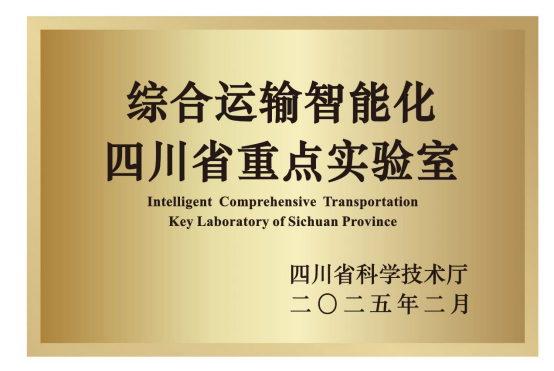
实验室原名“综合运输四川省重点实验室”,始建于2000年,于2007年获四川省科学技术厅批准建设,是国内第一个综合运输领域的省级重点实验室,2024年底顺利通过主管部门组织的重整优化考核,并更名为“综合运输智能化四川省重点实验室”。
The laboratory, formerly known as the "Key Laboratory of Comprehensive Transportation in Sichuan Province", was established in 2000 and was approved by Science and Technology Department of Sichuan Province in 2007. It is the first provincial key laboratory in the field of comprehensive transportation in China. At the end of 2024, it successfully passed the reorganization and optimization assessment organized by the competent authority and was renamed as the "Key Laboratory of Comprehensive Transportation Intelligence in Sichuan Province".
实验室依托全国排名第一的交通运输工程国家一级重点学科,围绕我国交通强国战略、综合交通运输系统建设领域的重大需求,针对国家亟需解决的关键科学技术问题,开展综合交通运输前沿基础性研究和科技创新工作,科研成果丰硕。近五年来,实验室主持国家重点研发计划项目课题3项,围绕CZ铁路工程承担国家重点研发项目子任务7项,主持国家自然科学基金、社会科学基金等国家级项目60余项;主持省部级项目近150项;获省部级及一级协会学会科技进步奖20项;发表高级别论文近500篇,已授权发明专利200多项;主持和参与制定行业、地方及团体标准5项;出版学术专著30余部,其中1部学术著作入选国家科学技术学术著作出版基金资助项目。
The laboratory, anchored in the nationally top-ranked first-level national key discipline in transportation engineering, focuses on addressing major needs under China's national strategy to build a strong transportation nation and the development of an integrated transportation system. Targeting critical scientific and technological challenges that the nation urgently needs to resolve, it conducts frontier basic research on integrated transportation and promotes scientific and technological innovation, yielding substantial research achievements. Over the past five years, the laboratory has led 3 projects under the National Key Research and Development Program, undertaken 7 sub-tasks of National Key Research and Development Projects related to the CZ Railway Engineering, and presided over over 60 national-level projects including those funded by the National Natural Science Foundation of China and the National Social Science Fund. It has also led nearly 150 provincial and ministerial-level projects, won 20 science and technology progress awards from provincial/ministerial authorities and first-class associations/institutes, published nearly 500 high-level papers, obtained over 200 authorized invention patents, led or participated in formulating 5 industry, local, and group standards, and published over 30 academic monographs—one of which was selected for funding by the National Science and Technology Academic Monograph Publishing Fund.
主要研究方向:
Main Research Directions:
(1)综合运输规划与管理智能化方向:多网融合的综合交通运输需求预测,多方式交通系统协同规划与设计,运力资源配置决策;
The research direction of intelligent planning and management for integrated transportation encompasses demand forecasting for integrated transportation systems under multi-network integration, collaborative planning and design of multi-modal transportation systems, and decision-making on the allocation of transport capacity resources;
(2)智慧物流与数智化运输组织协同技术方向:物流供需能力动态辨识,城市群异构物流资源协同决策,超大型工程正逆向物流组织优化与资源调度,乡村物流生态化组织与资源配置;
The research direction of collaborative technology for intelligent logistics and digital-intelligent transportation organization encompasses dynamic identification of logistics supply and demand capabilities, collaborative decision-making for heterogeneous logistics resources in urban agglomerations, organizational optimization and resource scheduling of forward and reverse logistics for mega-engineering projects, as well as ecological organization and resource allocation of rural logistics.;
(3)智慧公路交通管控数字化理论与技术方向:基于高速公路交通流高清感知,开展智能网联混合交通环境下的管控与优化;
The research direction of digital theory and technology for intelligent highway traffic control and management encompasses conducting research on control and optimization under the environment of intelligent connected mixed traffic, based on high-definition perception of expressway traffic flow;
(4)综合运输系统安全与应急保障方向:运输事故安全主动防控,基于人因的事故分析与安全保障,基于数字孪生的事故应急救援,突发事件下大型综合枢纽客流应急疏散。
The research direction of safety and emergency support of integrated transportation system encompasses research on proactive prevention and control of transportation accidents, accident analysis and safety guarantee based on human factors, emergency rescue based on digital twins, and emergency evacuation of passenger flow in large-scale comprehensive hubs during emergencies.

版权所有 © 西南交通大学交通运输与物流学院
地址:四川省成都市郫都区犀安路999号 邮编:611756 联系电话:(028)66366165 学院其他部门联系电话
 学院办公室:
 学院纪委邮箱:
 投稿咨询:


版权所有 © 西南交通大学交通运输与物流学院
地址:四川省成都市郫都区犀安路999号 邮编:611756 联系电话:(028)66366165 学院其他部门联系电话
学院办公室:
学院纪委邮箱:
投稿咨询: